
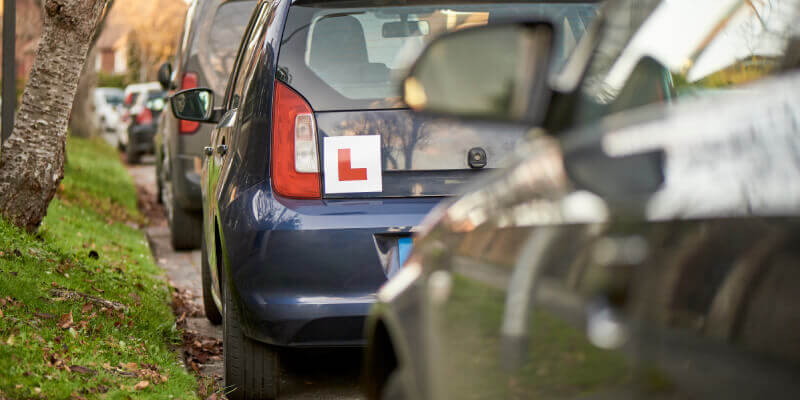
If you’ve ever felt nervous about squeezing into a tight space at the side of the road, you’re not alone. Parallel parking can be one of the most nerve-wracking milestones for new drivers.
Learning how to do a parallel park isn’t about luck or guesswork. It relies on understanding the process, using reference points and staying calm. Once you learn the method, it becomes second nature.
In this guide, we’ll break everything down in a simple, step-by-step way to help you feel more confident when parking at the side of the road.
What is parallel parking?
Parallel parking is when you reverse your car into a space at the side of the road so that your vehicle ends up parallel to the kerb, usually between two parked cars.
It’s one of the core manoeuvres you may be asked to carry out during your practical driving test. An examiner might ask you to pull up on the right and reverse, perform a reverse bay park, or to parallel park behind another vehicle.
The aim is straightforward: stop close to the kerb, keep full control of the vehicle, remain aware of other road users, and avoid mounting the pavement. You’ll normally be expected to finish within around 30cm of the kerb.
Don't aim for a perfect single move. Focus on safety, control, and awareness every time.
What’s the difference between parallel parking and reverse parking?
This is often confusing for learners. Parallel parking is the act of reversing into a space along the side of the road so that your car is aligned with the kerb.
Reverse parking is a broader term. It can refer to reversing into a bay in a car park or backing onto a driveway or side road, and it’s important to understand general parking rules and restrictions before performing any manoeuvre on the road.
The main difference is positioning: parallel parking lines your car along the kerb, while reverse bay parking positions it between the painted lines. This distinction can help you practise the right method for your test.
Parallel parking steps made simple
Follow your instructor's reference points—they depend on your car—but the method remains virtually the same.
1. Start by choosing a safe and legal space
There should be enough room — ideally around one and a half times the length of your car when practising. Make sure you’re not blocking a driveway, junction or crossing, and always check road signs and markings in line with the Highway Code. If you’re ever unsure about general parking rules, it’s important to understand where parking is permitted and where restrictions apply before attempting the manoeuvre.
2. Position the car correctly
Signal clearly, check your mirrors and blind spots, and pull up parallel to the vehicle you’ll be parking behind. Leave roughly a door’s width gap between your car and theirs, with the rear bumpers approximately level. Keep your wheels straight at this stage, as strong starting positioning makes the rest of the manoeuvre much easier.
3. Select reverse gear and carry out full observations
This isn’t a quick glance — check your mirrors, look over both shoulders and continue scanning throughout.
4. Reverse slowly to your first reference point
Move back using steady clutch control. When the rear of the parked car lines up with your chosen visual marker in the window or mirror, turn your steering wheel one full turn to the left (if parking on the left-hand side).
5. Continue reversing to around a 45-degree angle
You’ll often see the kerb appear in your left door mirror. When it reaches the correct position, steer fully to the right to guide the front of the car into the space.
6. Straighten and adjust
As the vehicle approaches the kerb, straighten the steering wheel. Keep checking your distance from the kerb, the space in front and behind, and the surrounding traffic. If you need to make a slight adjustment, that’s perfectly acceptable. What matters most is control and safety. Once positioned correctly, secure the car.
Parallel parking reference points
Reference points are visual cues to help judge when to steer, reducing guesswork—especially for learners.
However, reference points are car-specific. What works in one vehicle won’t necessarily work in another. That’s why consistent practice in the same car makes such a difference.
If you’re taking driving lessons in Northampton, your instructor will guide you in finding reference points on your specific vehicle—such as which mirror or window edge to watch. Over time, you’ll become less reliant on these fixed cues as your spatial awareness grows, but at first, using them can make parking much less daunting.

Common parallel parking mistakes learners make
Even when you understand the steps, a few common mistakes can make parallel parking feel more difficult than it needs to be. Recognising these early can make practising far more productive.
- Starting from the wrong position: If your car begins too close or too far away from the parked vehicle, the angles of the manoeuvre won’t work properly. Taking a moment to line the car up carefully before selecting reverse makes the rest of the process much easier.
- Reversing too quickly: Learners often feel rushed by vehicles behind them and rush the manoeuvre. Moving slowly with steady clutch control gives you far more time to observe, steer accurately and make small adjustments if needed.
- Turning the steering wheel too early or too late: Timing plays a big role in parallel parking. Steering too soon can push the car towards the kerb too sharply, while turning too late may leave the vehicle sitting at an awkward angle in the space.
- Forgetting continuous observations: Because you’re concentrating on steering and positioning, it’s easy to forget that the road around you is still active. Regularly checking mirrors, blind spots and the rear window shows you’re aware of cyclists, pedestrians and passing vehicles.
- Trying to complete the manoeuvre in one movement: Many learners feel they must park perfectly on the first attempt. In reality, making a small correction is completely normal. Taking the time to adjust your position safely shows control and good judgement.

What examiners are looking for
Much of the anxiety around parallel parking stems from the fear of getting it wrong.
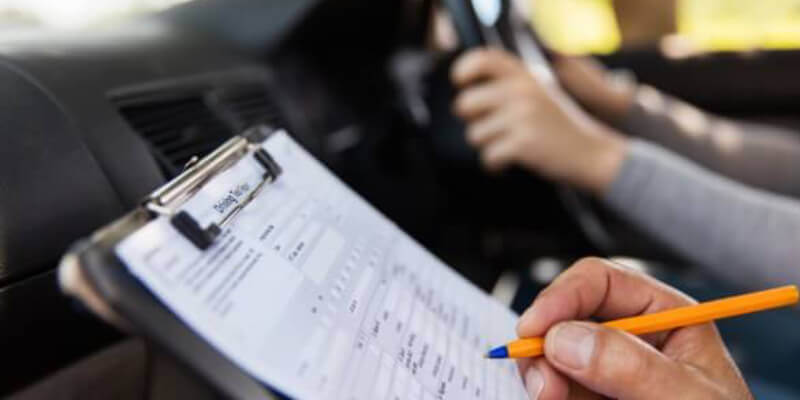
Examiners are not expecting perfection. They’re assessing whether you:
- Maintain control of the vehicle
- Use effective, consistent observations
- Respond safely to other road users
- Finish in a safe and reasonable position
You’re allowed to correct yourself. A small adjustment won’t automatically result in a serious issue. What tends to cause more significant problems is mounting the kerb, hitting another vehicle, failing to observe properly or losing control of the car.
During your test, each fault counts as either minor or serious depending on how they affect safety and control, so it’s important to understand how examiners assess them.
Practical tips to make it easier
- Slow everything down. One of the most effective ways to improve your parallel parking is simply to take it slower. Most mistakes happen because learners rush. Move back at a steady, clutch-controlled pace so you have time to think and react.
- Keep observing throughout the manoeuvre. This isn’t a one-time mirror check — keep scanning your rear window, side mirrors and blind spots regularly. Cyclists, pedestrians and passing vehicles can appear quickly, so it’s crucial to stay aware of your surroundings at all times.
- Focus on what the car is doing. Avoid relying purely on memorised steering instructions. Instead of focusing on the wheel's fixed turns, focus on how the car is moving. If the angle looks too sharp, pause. If you’re drifting too close to the kerb, adjust. Driving is about responding to what you see.
- Don’t worry about being perfectly close to the kerb. Aim for about 30cm from the kerb, but being slightly further away is better than hitting the pavement.
- Practise somewhere quieter first. It often helps to practise in quieter residential areas before attempting busier roads. If you’re having driving lessons in Northampton, there are plenty of suitable streets where you can build confidence without added pressure from heavy traffic.
- Reset if it doesn’t go to plan. If it doesn’t go to plan the first time, that’s completely fine. Pause, make the car safe, pull forward to straighten up and have another go. Examiners aren’t expecting a perfect one-move park — they’re looking to see that you stay calm, stay in control and deal with it safely.
Putting it all into practice
Parallel parking is often portrayed as one of the hardest parts of learning to drive, but in reality, it’s simply a skill that improves with practice and understanding.
Once you break it down into clear steps, use reliable reference points and focus on steady observations, it becomes far more manageable. You don’t need perfection — you need control, awareness and the ability to make safe decisions.
Expect it to feel challenging at first; that’s completely normal. Every driver once had to learn the same process. With consistent practice and the right guidance from a driving school in Northampton, parallel parking becomes less about nerves and more about routine.
Stick with it, trust the process and give yourself time to improve. Before long, it will feel like just another everyday part of driving — and one you can approach with confidence.